Blended Brags
Recently, the school counselors and college and career specialists have been working on learning and rolling out a digital tool called Naviance. Naviance is a college and career readiness portfolio platform that offers a range of tools including curriculum, planning, surveys, document collection, and many more. Our students will be using this site to produce their SSPs. The truly great part is that these SSPs will live with the students for at least their high school careers and will be a collaborative effort among the students, families, teachers, and counselors.
Cool Tools
Edulastic is a free tool for building and assigning standards-based formative assessments. The really great thing about this site is the library of assessments from the community of users.
Professional Learning
In The difference between being eligible for college and ready for college, I found one of the most important reasons why student-centered learning matters. SCL practices get our kids ready for college by instilling them not just with content knowledge, but the knowledge of how to learn.
Thinking of trying out PBL? Read 4 Ways to Promote Growth Mindset in Project-Based Learning to ensure that your students are learning from their failures and reflecting on their progress.
The interesting interview in Blended learning can enable teachers to focus on cognitive skills helps to illuminate how a transition to blended learning makes good teaching great.
Read how TED-ED clubs encourage students to use their voice in producing authentic speeches for an audience.
Tuesday, March 29, 2016

Wednesday, March 16, 2016
Blended Bulletin, Issue 24
Blended Brags
Where to start? So much to brag about!
First and foremost, Chromebooks are finally in our classrooms and in the hands of our students. Carts are being used at Bulkeley Lower and at JMA, and over 260 11-12 graders at Bulkeley Upper now have devices to take home.
Chromebook Kickoff
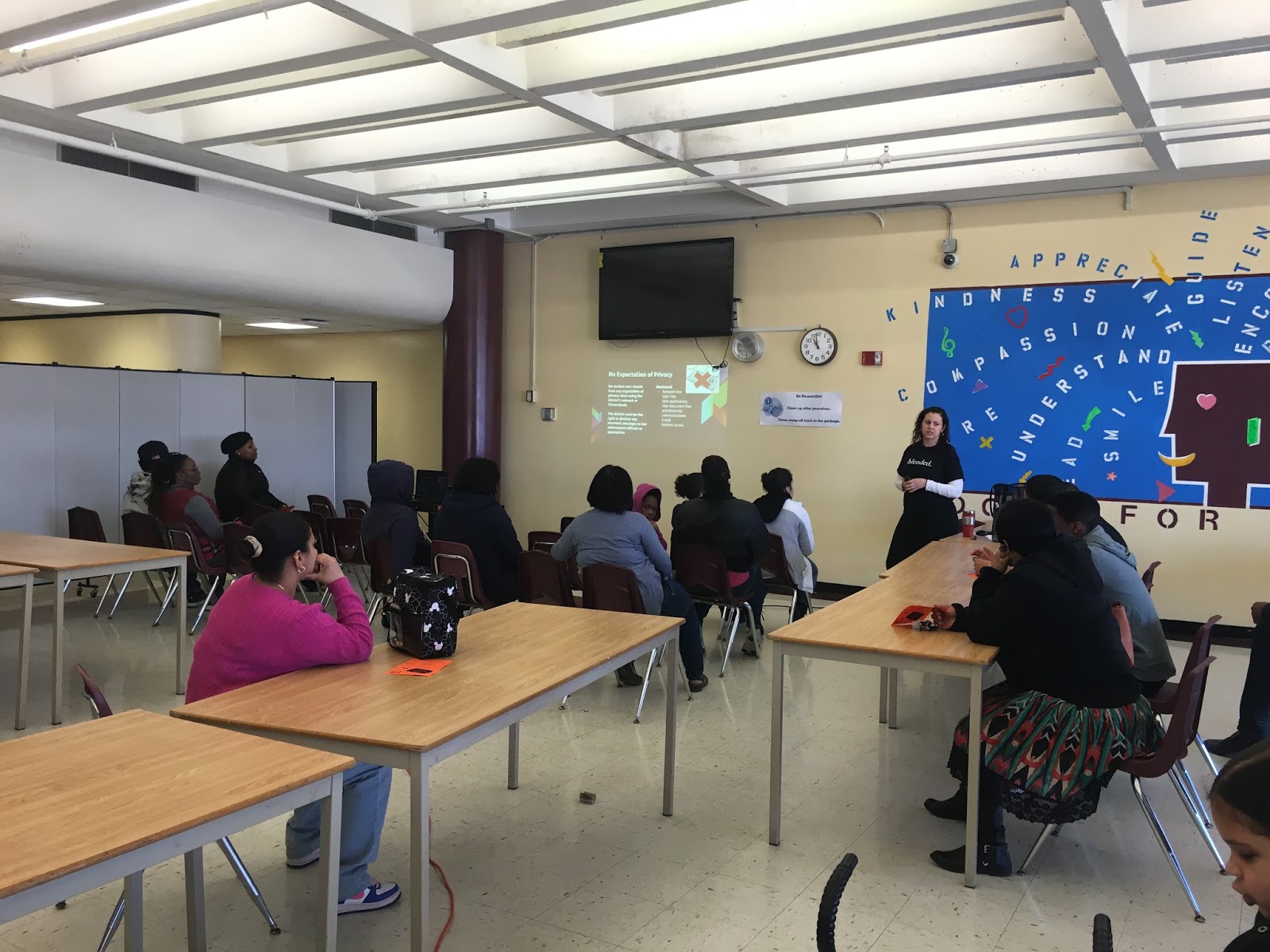
On Saturday, March 12, from 9:00 AM to 7:00 PM, just under 200 students and family members came to Bulkeley High School for the first ever Chromebook Kickoff. Students and families first learned about Chromebook care and HPS policies in two brief presentations, given in both English and Spanish. After passing through these stations and signing some paperwork, the students received their devices. A big thank you to Stacey Rosado, Diana Gonzalez, Myrna Rivera, Billy Conroy, Kevin Clemens, Diane Anthony, Yolanda Baez, Gayle Allen-Greene, and Kim Childress for making everything run smoothly for all 10 hours! A special thank you to the student volunteers from Bulkeley's National Honor Society for guiding families around in the school and helping with childcare, as well as the Women's League for providing childcare.


Where to start? So much to brag about!
First and foremost, Chromebooks are finally in our classrooms and in the hands of our students. Carts are being used at Bulkeley Lower and at JMA, and over 260 11-12 graders at Bulkeley Upper now have devices to take home.
Chromebook Kickoff
On Saturday, March 12, from 9:00 AM to 7:00 PM, just under 200 students and family members came to Bulkeley High School for the first ever Chromebook Kickoff. Students and families first learned about Chromebook care and HPS policies in two brief presentations, given in both English and Spanish. After passing through these stations and signing some paperwork, the students received their devices. A big thank you to Stacey Rosado, Diana Gonzalez, Myrna Rivera, Billy Conroy, Kevin Clemens, Diane Anthony, Yolanda Baez, Gayle Allen-Greene, and Kim Childress for making everything run smoothly for all 10 hours! A special thank you to the student volunteers from Bulkeley's National Honor Society for guiding families around in the school and helping with childcare, as well as the Women's League for providing childcare.
ThinkCERCA Training
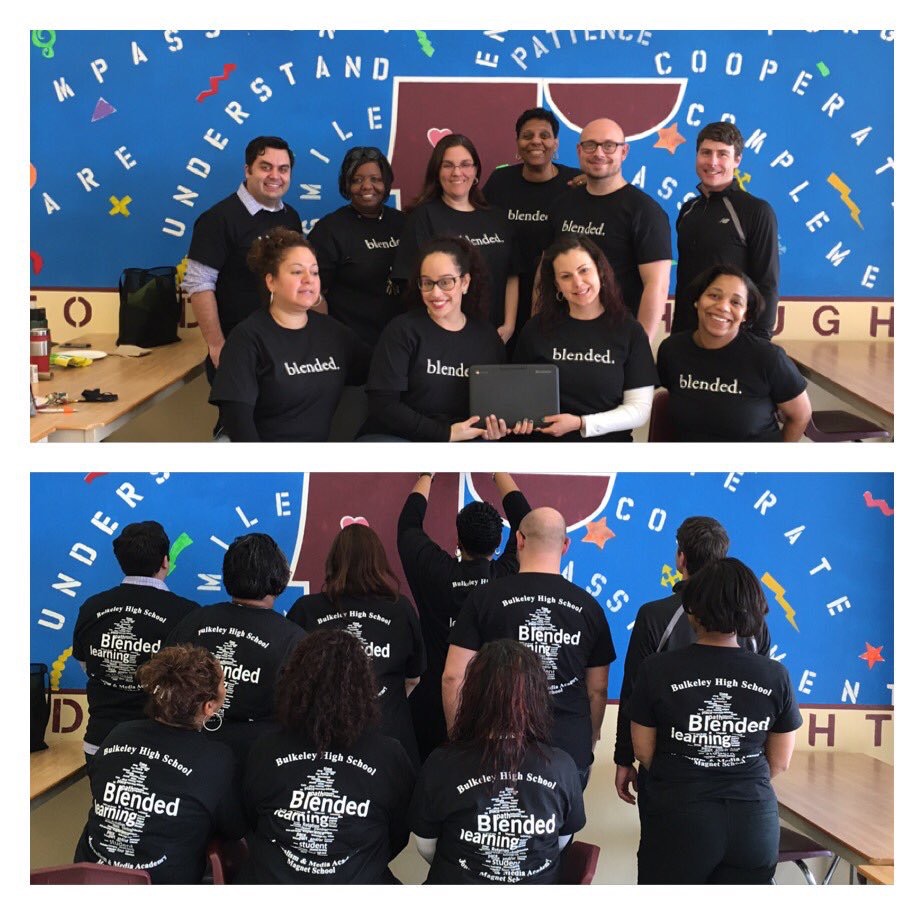
Last Thursday, English, social studies, and science teachers at Bulkeley and JMA all received the first round of training to use ThinkCERCA as integrated digital content in their blended classrooms. The teachers were excited by what they learned and know that it will have an impact on student literacy. Steve from ThinkCERCA was energetic and responsive to the needs of the teachers, and I know I don't just speak for myself when I say that I can't wait to see this software in action!

Social Studies Site Visit
Last Friday, Kevin Clemens, Justin Taylor, and Janice Milroy travelled to Maloney High School in Meriden to see examples of station rotation models in social studies classrooms. The group walked away with some important insights and spent the afternoon drafting or revisiting their instructional designs. Below is Kevin's unique design where instead of thinking about classes day-by-day, he designed around the principal learning objective of certain class periods.

Monday, March 7, 2016
Blended Bulletin, Issue 23
Blended Brags
Last week, Mario Sousa-Pena, Wendy Turek, and Kaitlin Sullivan visited Platt High School in Meriden to look at blended learning using station rotations. They took away some important lessons and spent the afternoon revisiting their classroom designs. One important note to share was that students will not use their devices unless we give them a reason to do so!
Cool Tools
As you may know by now, one of the tools we will be using systematically is ThinkCERCA. Research from a rather extensive pilot in Chicago suggests that ThinkCERCA is one of two literacy tools that has a statistically significant impact on learning. We will soon be having training with this platform, but if you are interested in getting a head start, here are some online training modules.
As an update Google Docs, Sheets, and Slides have all new templates that you can choose from. To find the templates, go straight to docs.google.com. The templates will appear at the top of the page.
PBS has created Election Central as a teaching tool for what promises to be an historical 2016 in politics.
Professional Learning
No matter how many articles I read about technology programs, growth mindset's place in the change process remains crucial. Check out an interesting way to chart growth mindset in Does your school have a growth mindset when it comes to change?
As we move to student-centered approaches, the answers we should use to answer the question, "Did that lesson go well?" need to change. Find out how in How to Move from First-Person to Learner-Centered Teaching.
In a follow up to the WALL-E article from last week, Interaction With Digital Content: 5 Actions to Look For In Your Students’ Online Experience offers ideas about what to look for to ensure students are actively using digital content.
What would happen if we asked our students to design their school experience? How high school would be different if students could design it offers some ideas. My favorite line: "I was passionate about it...You could think and use your ideas, and be creative."
Webinar: Register for Engaging Struggling Learners in Online and/or Blended Environments which will be shown on Tuesday, March 15 at 6:00 PM. Remember, even if you can't tune in then, you will be sent a link for a recording.
Last week, Mario Sousa-Pena, Wendy Turek, and Kaitlin Sullivan visited Platt High School in Meriden to look at blended learning using station rotations. They took away some important lessons and spent the afternoon revisiting their classroom designs. One important note to share was that students will not use their devices unless we give them a reason to do so!
Cool Tools
As you may know by now, one of the tools we will be using systematically is ThinkCERCA. Research from a rather extensive pilot in Chicago suggests that ThinkCERCA is one of two literacy tools that has a statistically significant impact on learning. We will soon be having training with this platform, but if you are interested in getting a head start, here are some online training modules.
As an update Google Docs, Sheets, and Slides have all new templates that you can choose from. To find the templates, go straight to docs.google.com. The templates will appear at the top of the page.
PBS has created Election Central as a teaching tool for what promises to be an historical 2016 in politics.
Professional Learning
No matter how many articles I read about technology programs, growth mindset's place in the change process remains crucial. Check out an interesting way to chart growth mindset in Does your school have a growth mindset when it comes to change?
As we move to student-centered approaches, the answers we should use to answer the question, "Did that lesson go well?" need to change. Find out how in How to Move from First-Person to Learner-Centered Teaching.
In a follow up to the WALL-E article from last week, Interaction With Digital Content: 5 Actions to Look For In Your Students’ Online Experience offers ideas about what to look for to ensure students are actively using digital content.
What would happen if we asked our students to design their school experience? How high school would be different if students could design it offers some ideas. My favorite line: "I was passionate about it...You could think and use your ideas, and be creative."
Webinar: Register for Engaging Struggling Learners in Online and/or Blended Environments which will be shown on Tuesday, March 15 at 6:00 PM. Remember, even if you can't tune in then, you will be sent a link for a recording.
Wednesday, March 2, 2016
Platt Visit!
I really enjoyed
having the opportunity to visit Platt and observe and interact in three
different science classrooms. Our focus of our trip was to see station
rotation. We observed three teachers that plan together or in the same system
as one another.One helpful tip I learned with implementing stations was using a
timer that accounts for transition time. This timer will reset itself as well
so you do not need to remember to do that in between each station. It is a
google app meant for training and the transition time is really the “rest”
time.

Being in the teacher’s classrooms, you could tell that the
students were accustomed to the stations and many of the students were eager to
complete the stations. I really liked that it was a standard set up that they
always had a drawing, reading, video, hands on or simulation activity and a
vocabulary station. These stations also have their own designated area so
students know exactly where to expect each station. It was clear that this
routine benefited the students. The teachers did not assign where students
needed to start but just stated that there could only be 4 or 5 students at
each station. I liked this aspect because students were able to start where
they felt most confident or where the best style for them to start learning the
content.
A blended learning detail that I enjoyed was seeing their
use of QR codes. The code was not 100% necessary at the station since the
teachers tablet was available at the station but but having the QR code
available for students that were absent would be really helpful. We also saw
that the students used QR codes to access their online textbook and other
materials so they were very comfortable with this process.
Monday, February 29, 2016
Blended Bulletin, Issue 22
Blended Brags
Last Tuesday, Kevin Killeen, Christy Berry, and Diana Ayrula visited classrooms at Lincoln Middle School in Meriden in the morning and collaborated on classroom design in the afternoon. These math teachers were happy to see blended methods in action and utilized the planning time to revisit their first draft designs. Diana was nice enough to open up her classroom for this work, which was helpful in seeing a station rotation set up in a relatively small space. I'm looking forward to our science visit tomorrow!
Cool Tools
If you like using interact quiz tools (i.e. Kahoot, Socrative) in class, you should check out Quizalize. One feature of this tool that I particularly like is asynchronous quizzing. You can assign quizzes in class all at the same time, or assign quizzes for students to use as practice at home.
Newsela has teamed up with Rock the Vote to create Students Vote 2016. This tool provides a wealth of resources for teaching election-themed text sets at differentiated reading levels, as well as interactive and real-time voting on primary and election days.
Expii Solve is a weekly set of 5 challenge math problems ranging from middle school math, to AP-level. These problems require math skills, but also a healthy dose of logic and creativity. The founder, a professor at Carnegie Mellon, explains his philosophy behind the site here.
Open eBooks is a brand new initiative launched by the White House to increase student access to high quality books. Teachers and students at Title I schools and on military bases, as well as any special education teachers can register to provide access to the free library to their students. 10 major publishers have contributed content, and I'm sure that list will grow. Read more about Open eBooks here and watch Michelle Obama's introduction to the app here. #GoOpen
Professional Learning
My favorite article from this past week is Why Your Tech-Obsessed Conference Presentation Stinks—and How to Make It Better. As many of you know, I've had the opportunity to travel to quite a few of the biggest edtech conferences in the past year-- ISTE, iNACOL, FETC, and METC. One of my worries is just what this article highlights-- tech decisions are being made for show, not for actual impact on teaching and learning. Justin Taylor and I presented about just this issue at METC, and it is a relief to see that others are fighting the good fight!
Another article that spoke to me for various reasons was What WALL-E Teaches Us About Adaptive and Personalized Learning. My Disney fanaticism aside, the article's point about how adaptive technologies may make students and teachers cognitively "lazy" is an important warning about integrating digital content. It is often easy for students and teachers to sit back and let the software decide what should be learned when. However, this can "deskill" both students and teachers from making important decisions about their own learning or teaching.
Reflection is one of the Core Four Elements of blended learning, but can easily be overlooked. In How One Teacher Champions Student Reflection with Technology and Public Speaking, a teacher talks about how she uses Zaption (you might also consider Vialogues) to have her students reflect and guide the feedback on their presentations
Last Tuesday, Kevin Killeen, Christy Berry, and Diana Ayrula visited classrooms at Lincoln Middle School in Meriden in the morning and collaborated on classroom design in the afternoon. These math teachers were happy to see blended methods in action and utilized the planning time to revisit their first draft designs. Diana was nice enough to open up her classroom for this work, which was helpful in seeing a station rotation set up in a relatively small space. I'm looking forward to our science visit tomorrow!
Cool Tools
If you like using interact quiz tools (i.e. Kahoot, Socrative) in class, you should check out Quizalize. One feature of this tool that I particularly like is asynchronous quizzing. You can assign quizzes in class all at the same time, or assign quizzes for students to use as practice at home.
Newsela has teamed up with Rock the Vote to create Students Vote 2016. This tool provides a wealth of resources for teaching election-themed text sets at differentiated reading levels, as well as interactive and real-time voting on primary and election days.
Expii Solve is a weekly set of 5 challenge math problems ranging from middle school math, to AP-level. These problems require math skills, but also a healthy dose of logic and creativity. The founder, a professor at Carnegie Mellon, explains his philosophy behind the site here.
Open eBooks is a brand new initiative launched by the White House to increase student access to high quality books. Teachers and students at Title I schools and on military bases, as well as any special education teachers can register to provide access to the free library to their students. 10 major publishers have contributed content, and I'm sure that list will grow. Read more about Open eBooks here and watch Michelle Obama's introduction to the app here. #GoOpen
Professional Learning
My favorite article from this past week is Why Your Tech-Obsessed Conference Presentation Stinks—and How to Make It Better. As many of you know, I've had the opportunity to travel to quite a few of the biggest edtech conferences in the past year-- ISTE, iNACOL, FETC, and METC. One of my worries is just what this article highlights-- tech decisions are being made for show, not for actual impact on teaching and learning. Justin Taylor and I presented about just this issue at METC, and it is a relief to see that others are fighting the good fight!
Another article that spoke to me for various reasons was What WALL-E Teaches Us About Adaptive and Personalized Learning. My Disney fanaticism aside, the article's point about how adaptive technologies may make students and teachers cognitively "lazy" is an important warning about integrating digital content. It is often easy for students and teachers to sit back and let the software decide what should be learned when. However, this can "deskill" both students and teachers from making important decisions about their own learning or teaching.
Reflection is one of the Core Four Elements of blended learning, but can easily be overlooked. In How One Teacher Champions Student Reflection with Technology and Public Speaking, a teacher talks about how she uses Zaption (you might also consider Vialogues) to have her students reflect and guide the feedback on their presentations
Wednesday, February 24, 2016
Blended in Action
On Tuesday Kevin Killeen, Diana Ayrula and I traveled to Lincoln Middle School in Meriden to see how they use Blended Learning strategies in their math classes. We observed and participated in 3 classes, two 7th grade and one 6th grade. The students were engaged in rotating stations throughout the periods which resulted in a total of 12 activities.
Students shared with us that they very much enjoyed working in stations. The activities included matching tasks, shared document work on Chromebooks, direct instruction with the teacher, watching instructional videos, sorting, practice on individual white boards, and book work. At the conclusion of the first class students were asked to evaluate their groups' work based on the 8 Common Core Standards of Practice which were posted on the wall. Not only did the students refer to the standards but they cited examples.
The second half of the day was spent in meaningful collaboration with Paul. We learned more about the software that will be available to us and completed some necessary steps before full implementation. Overall it was a great experience.
Students shared with us that they very much enjoyed working in stations. The activities included matching tasks, shared document work on Chromebooks, direct instruction with the teacher, watching instructional videos, sorting, practice on individual white boards, and book work. At the conclusion of the first class students were asked to evaluate their groups' work based on the 8 Common Core Standards of Practice which were posted on the wall. Not only did the students refer to the standards but they cited examples.
The second half of the day was spent in meaningful collaboration with Paul. We learned more about the software that will be available to us and completed some necessary steps before full implementation. Overall it was a great experience.
Monday, February 22, 2016
Blended Bulletin, Issue 21
Blended Brags
This last minute brag goes out to Susan Johnston after just wrapping up a planning meeting with her THIS morning! Susan will be beginning a rhetoric unit with her English classes, and wanted to innovate with her instructional design. In reflecting, she noted that her classes are running fine, but she wants there to be more engagement in learning, not just engagement in class because her students like her. So here is her thinking:
Susan is planning for a six-week unit broken down into three two-week cycles. During the first two weeks, students will be learning the requisite content-specific knowledge of rhetoric (i.e. pathos, ethos, logos, figurative language, etc.). In the next two weeks, students will continue to reinforce their knowledge of rhetoric, but also start to learn more about a particular social justice issue of their choice. In the final two weeks, students will be writing and delivering speeches on their issue, employing rhetorical techniques. In the first four weeks of learning and practicing, students will be in a station rotation, interacting with media demonstrating examples of rhetoric produced with Edpuzzle in one station and reinforcing their new learning in a teacher-led small group in a second station. I can't wait to see this in action!
Cool Tools
Flippedmath.com is a site that provides engaging and well-produced videos and lessons for teaching Algebra, Geometry, Algebra II, and Pre-calculus. The lessons in each subject are set up in a curricular sequence that would make a great supplement to classroom instruction. Thanks, Wendy Jackwin for the great suggestion!
Coming Soon: Amazon will be entering the OpenEd marketplace with their site Amazon Inspire. Rumors are that they will be using their marketplace software to allow users to post, rate, manage and discover OER. If this has anywhere near the impact Amazon had on the consumer industry, look out for big things in May! Read more about Amazon Inspire here.
Professional Learning
When we send our students home with assignments that involve technology, we often leave parents out of the loop. Find out how to remedy this in Flip This House: Tips for Bridging the Tech Gap Between School and Home.
In Educating an Original Thinker, the idea of teaching "rebels with a cause" is discussed in the context of student-centered learning.
Do You Know Me? The Voice of a Disgruntled Student in a Boring Class lets you into the heads of so many of our students who feel disconnected from school, but certainly aren't disconnected from learning.
This last minute brag goes out to Susan Johnston after just wrapping up a planning meeting with her THIS morning! Susan will be beginning a rhetoric unit with her English classes, and wanted to innovate with her instructional design. In reflecting, she noted that her classes are running fine, but she wants there to be more engagement in learning, not just engagement in class because her students like her. So here is her thinking:
Susan is planning for a six-week unit broken down into three two-week cycles. During the first two weeks, students will be learning the requisite content-specific knowledge of rhetoric (i.e. pathos, ethos, logos, figurative language, etc.). In the next two weeks, students will continue to reinforce their knowledge of rhetoric, but also start to learn more about a particular social justice issue of their choice. In the final two weeks, students will be writing and delivering speeches on their issue, employing rhetorical techniques. In the first four weeks of learning and practicing, students will be in a station rotation, interacting with media demonstrating examples of rhetoric produced with Edpuzzle in one station and reinforcing their new learning in a teacher-led small group in a second station. I can't wait to see this in action!
Cool Tools
Flippedmath.com is a site that provides engaging and well-produced videos and lessons for teaching Algebra, Geometry, Algebra II, and Pre-calculus. The lessons in each subject are set up in a curricular sequence that would make a great supplement to classroom instruction. Thanks, Wendy Jackwin for the great suggestion!
Coming Soon: Amazon will be entering the OpenEd marketplace with their site Amazon Inspire. Rumors are that they will be using their marketplace software to allow users to post, rate, manage and discover OER. If this has anywhere near the impact Amazon had on the consumer industry, look out for big things in May! Read more about Amazon Inspire here.
Professional Learning
When we send our students home with assignments that involve technology, we often leave parents out of the loop. Find out how to remedy this in Flip This House: Tips for Bridging the Tech Gap Between School and Home.
In Educating an Original Thinker, the idea of teaching "rebels with a cause" is discussed in the context of student-centered learning.
Do You Know Me? The Voice of a Disgruntled Student in a Boring Class lets you into the heads of so many of our students who feel disconnected from school, but certainly aren't disconnected from learning.
Subscribe to:
Posts (Atom)